
ADNOC’s CEO, Dr. Sultan Ahmed Al Jaber, made video statement at CERAWeek 2026 about the conflict with Iran and the subsequent closure of the Strait of Hormuz. Dr. Al Jaber stated that “Twenty-one miles wide. Twenty million barrels a day. Nearly a fifth of the world’s oil and gas. Over a third of the world’s fertilizer. Almost a quarter of the world’s petrochemicals and significant amounts of industrial metals. In short, much of the oxygen of the global economy runs through a single throat. Yet, Iran believes that choking it is an acceptable strategy.” [1]
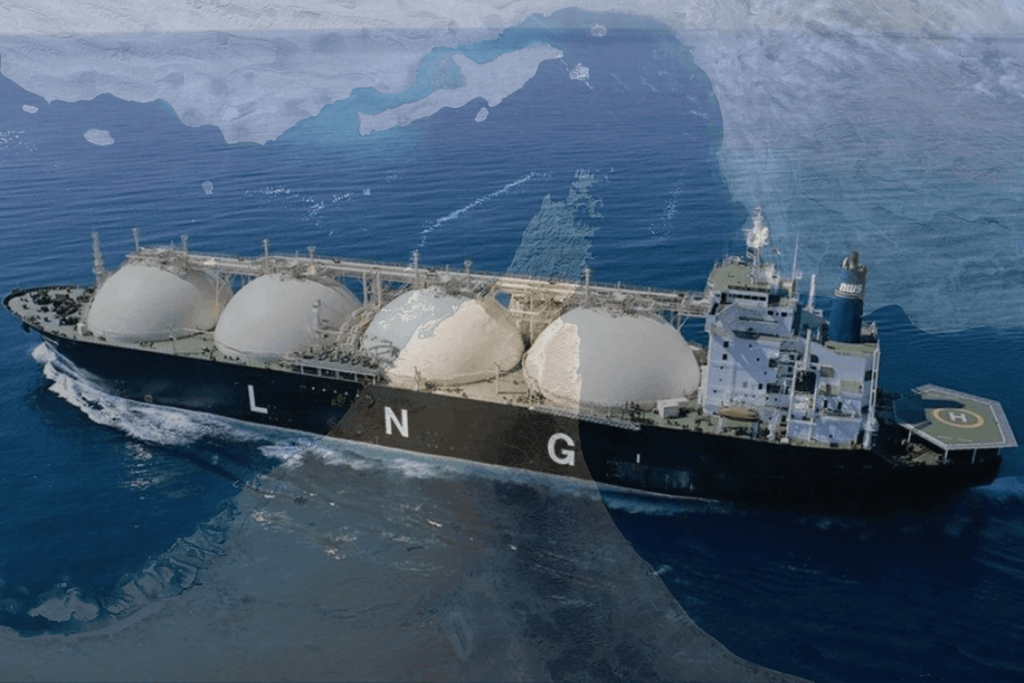
Along with oil, fertilizer, petrochemicals, etc., according to the U.S. EIA, roughly 20% of the world’s LNG exports were flowing through the Strait of Hormuz.[2] For a world that has become more and more dependent on LNG over the past few years for power generation, this is quite significant. But this is not the first or the last time (unfortunately) that we will have significant energy disruptions that greatly impact the global economy.
Disruptions can be short lived, such as labor strikes in Australian offshore LNG, or prolonged, completely shifting global energy market dynamics. Just within this past five years, we experienced the disruption of the Suez Canal in 2021, an energy crisis following the Russian invasion of Ukraine in 2022 and the subsequent reduction of Russian gas into Europe, and now the closure of the Strait of Hormuz due to the conflict with Iran.
While the April 2026 ceasefire opened the door to traffic potentially resuming through the Strait, renewed tensions and security risks have continued to constrain LNG cargo movements out of the region. Europe has continued to seek additional supply from the U.S., and the entire situation underscores how quickly global energy flows can be disrupted, and how fragile that stability remains.
Increasing energy security has always been a major topic of discussion. Although much of that discussion centered around physical supply and demand, while diversity of supply has been less emphasized in many areas. Economics took a higher priority in many cases, such as that with Europe heavily relying on Russian piped gas.
In my mind, the Iranian conflict brings to the forefront the need to reassess the real chokepoints in energy security. Lack of enough energy infrastructure to bypass any point being “choked” by geopolitical means. The UAE announced its “ramp up” of the Abu Dhabi Crude Oil Pipeline (ADCOP). It is now operating near capacity to bypass the Strait of Hormuz. Although it is not a full solution, it demonstrates that having alternative routes to deliver energy is quite necessary for global energy security.
Europe has become increasingly at risk of market disruptions over the past decade as it has pushed its Net-Zero agenda and moved away from fossil fuels and nuclear energy as sources of supply. However, it has become increasingly clear, despite opposition, that a complete transition away will not be possible. In March 2026, Ursula von der Leyen said, “This reduction in the share of nuclear was a choice. I believe that it was a strategic mistake for Europe to turn its back on a reliable, affordable source of low‑emissions power.” [3]
The United States, although largely shielded from global energy disruptions, has its own energy security concerns: particularly around infrastructure chokepoints. The U.S.’s “AI Cold War,” with China placing significant emphasis on meeting growing demand for data centers, is accelerating the need for reliable energy supply to support AI and maintain global competitiveness. This will require substantial expansion of natural gas pipeline infrastructure to fuel new gas-fired generation, along with additional grid infrastructure and upgrades to avoid bottlenecks in delivery.[4]
Other parts of the world such as Southeast Asia are particularly vulnerable to energy disruptions that can price them out of the market. For those who can switch back to coal, they are less affected, but those who cannot, must live with these disruptions which take a heavy economic and humanitarian toll.
Investing in new infrastructure that can help bypass known “chokepoints” and facilitate a truly diverse supply chain is the real way to create global energy security. It will also remove the threat of holding energy supply hostage during geopolitical tensions.
Assessing energy security chokepoints and guiding strategic infrastructure investment globally is necessary to establish sustained energy security and lift nations out of energy poverty toward greater economic prosperity.
While new infrastructure and supply diversification help address physical vulnerabilities, the promise of true energy security lies in the ability to anticipate and adapt to disruption before it unfolds. By moving beyond static assessments to dynamic modeling of changing market conditions, energy systems can become more agile and resilient. This adaptability is essential to addressing the trilemma of energy security, access, and sustainability.
RBAC’s natural gas and LNG market simulation tools can help market analysts solve the energy problems of the future and identify potential infrastructure bottlenecks and opportunities for supply diversification. Schedule a free demonstration and our team of experts will meet with you to discuss your market modeling needs and how tools such as GPCM® and G2M2® can help.
RBAC, Inc. has been the leading provider of market fundamental analysis tools used by the energy industry and related government agencies for over two decades. The GPCM® Market Simulator for North American Gas and LNG™ is the most widely used natural gas market modeling system in North America. RBAC’s G2M2® Market Simulator for Global Gas and LNG™ has been instrumental in understanding evolving global gas and LNG dynamics and is vital in fully understanding the interrelationship between the North American and global gas markets.