From AI Growth to Geopolitical Disruption: What’s Driving the Next Era of Natural Gas?
Natural gas continues to serve as a key element in the global energy system, and this has been reinforced by rising as due to rapid growth from data centers and AI, combined with new LNG export projects coming online. Meanwhile geopolitical shifts are redefining markets, and the natural gas industry is continually adapting to these changing winds.
In this edition of RBAC’s newsletter, we look at how these evolving demand patterns intersect with real-world market dynamics. We cover the ongoing LNG trade disruption between the United States and China, look at what happened at the Davos 2026, use the GPCM® Market Simulator for North American Gas and LNG™ to run a scenario adding new power plants in the Permian basin, and analyze the effects that the recent winter storm had on natural gas prices.
Want analysis that goes beyond headlines? Join RBAC’s mailing list to receive this newsletter, early access to new articles, and expert perspectives delivered straight to your inbox.
Top Stories in Natural Gas and LNG from Around the World
Quick Brief – One Year Since China Stopped Importing U.S. LNG
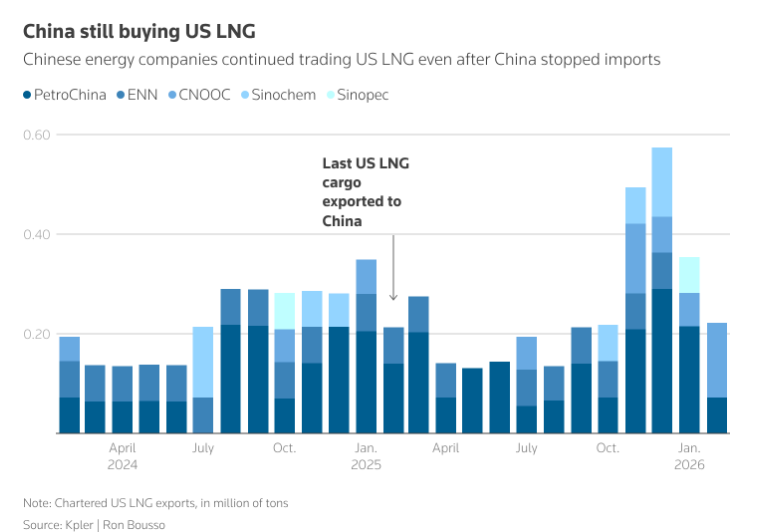
It has now been 1 calendar year since China last imported LNG from the United States, however Chinese firms have continued purchases of LNG from the U.S. These cargoes are not going to China and are instead being diverted to Europe where LNG demand has risen significantly in recent years.
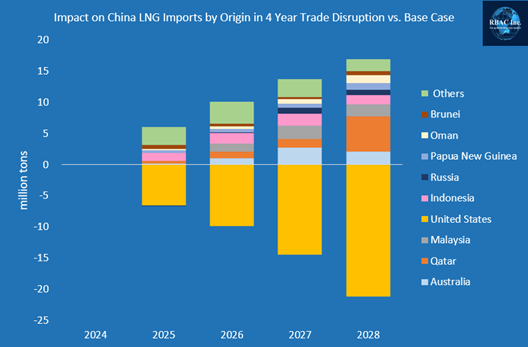
China has been meeting its domestic gas demand and filling the gap left by U.S. LNG from a variety of sources, notably from Qatar. RBAC previously covered the potential effects of the trade disruption of LNG between these two powerhouses in an article published early 2025.
President Trump could be visiting China this coming April and resuming LNG trade could potentially be one of the topics of discussion. What would happen if LNG trade resumed? What about if the disruption continues? Market analysts can utilize the G2M2® Market Simulator for Global Gas and LNG™ to see the potential effects of both scenarios as well as any other market scenarios one can think of.
Watch the clip below from our recent conference in November to see G2M2 in action.
From Climate-First to Energy Security-First: Davos 2026 at the World Economic Forum Part 2
In Part 1, we explored how Davos 2026 highlighted the limits of energy strategies that underweighted reliability, cost, and infrastructure. In Part 2, the focus shifts to what is now forcing the issue: surging electricity demand from AI and data centers, tightening gas–power interdependence, and the growing impact of physical, infrastructure, and market constraints that are reshaping outcomes faster than policy cycles alone.
Against this backdrop of plentiful supply and rising demand – developers, regulators, and opportunists are seeing green in western Texas, and several new power plants and projects have sprung up to take advantage of the favorable economic conditions. These natural gas power projects are being developed to provide both dispatchable power to meet peak demand as well as baseload power required by AI/demand center computing.
Accordingly, we created several large electric power customers in West Texas as new customers in the GPCM® Market Simulator for North American Gas and LNG™, and then observed their impact on supply, demand, flows, and prices in the region.
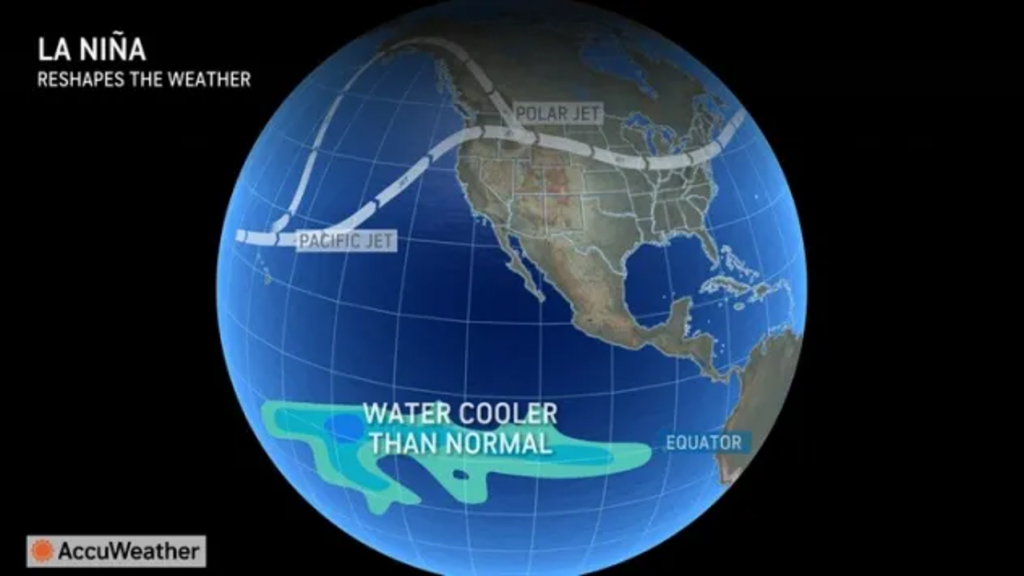
Winter Storm Fern: La Niña’s Freeze Sends Natural Gas Prices Soaring
Two thirds of the U.S. was ravaged by Winter Storm “Fern,” at the end of January 2026, dropping snow and leaving prolonged cold in its wake.
While its ferocity and duration was unforeseeable, we did know ahead of time that it would likely be colder and snowier as a result of the La Nina pattern. It stands to reason this could happen again, and by using GPCM® Market Simulator for Gas & LNG™ we can create various scenario analyses to mimic this weather occurrence in the future.
Taken from the treasure trove of the writings from our energy experts. Here read technical insights and far-sighted analysis relevant through the lens of today’s energy.
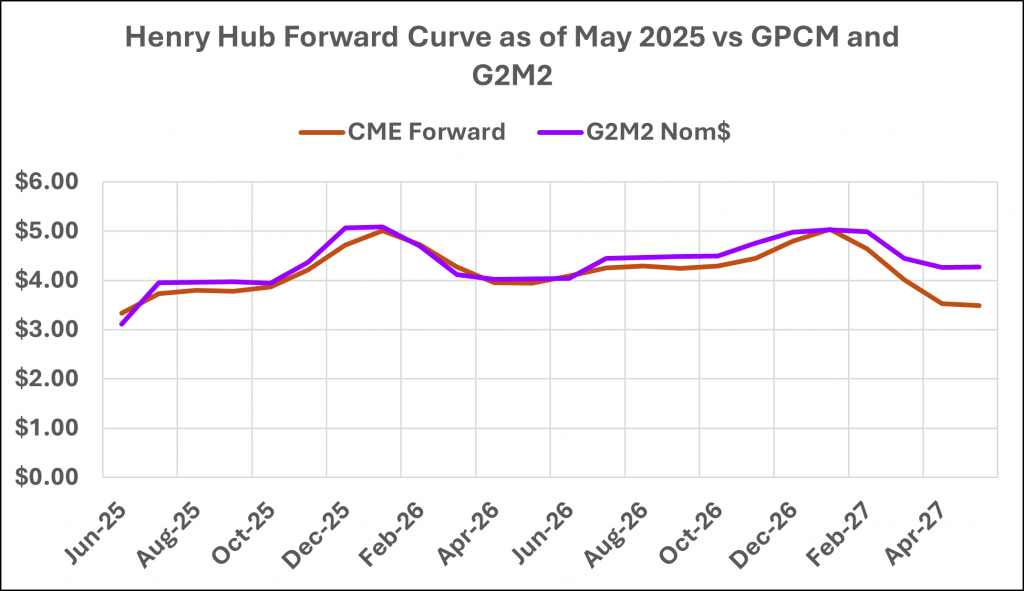
G2M2 Versus the Forward Curve
So how should analysts and market participants interpret price forecasts that deviate significantly from the forward curve? Are models, analysts, consultants, et al, that provide these deviant forecasts just out of their minds or are they on to something that other people do not see?
Read some of our engaging commentary on social media and join us in the conversation.
Policy Swings. Infrastructure Doesn’t.
The recent repeal of the EPA’s greenhouse gas “Endangerment Finding” adds another page to a long-running story of structural tension in U.S. energy policy. While one side of politics is calling it the biggest deregulation and money saver in history, the other side is calling it climate catastrophe. But what are the impacts in the years to come?
RBAC is the market-leading supplier of global and regional gas and LNG market simulation systems used by the energy industry and related government agencies for over two decades. The GPCM® Market Simulator for North American Gas and LNG™ is the most widely used natural gas market simulation system in North America. RBAC’s G2M2® Market Simulator for Global Gas and LNG™ has been instrumental in understanding evolving global gas and LNG market dynamics and is vital to fully grasp and leverage the interrelationship between the North American and global gas markets.